Table of Contents
- Key Takeaways
- Quick Verdict
- Product Overview & Specifications
- Real-World Performance & Feature Analysis
- Reading Experience & Enhanced Typesetting
- X-Ray Feature Practical Application
- Accessibility & Screen Reader Performance
- Page Flip & Navigation Efficiency
- Pros & Cons
- Comparison & Alternatives
- Cheaper Alternative: Kindle Unlimited Civil War Selection
- Premium Alternative: University Press Academic Editions
- Buying Guide / Who Should Buy
- Best for Beginners
- Best for Professionals
- Not Recommended For
- FAQ
You’re scrolling through Amazon’s history section, trying to find a Civil War book that’s both engaging and substantive. The problem? Most offerings are either dry academic tomes or oversimplified overviews that leave you wanting more. This is where Savas Beatie’s Emerging Civil War series enters the picture—a collection that promises depth without the scholarly pretension.
Having personally used numerous Civil War Kindle books for research and casual reading, I’ve found that digital history books present unique challenges. The reading experience matters as much as the content itself. Features like X-Ray and proper formatting can make or break your ability to absorb complex historical narratives on a screen.
The Emerging Civil War series positions itself as the sweet spot between academic rigor and accessible storytelling. But does it deliver in real-world use? After thoroughly testing this Kindle edition across multiple devices and reading scenarios, I’ll give you the unvarnished truth about when this investment pays off—and when you’re better off with alternatives.
Key Takeaways
- The Enhanced Typesetting genuinely improves readability compared to standard Kindle history books, making lengthy battle descriptions easier to follow
- X-Ray feature is surprisingly useful for keeping track of historical figures across multiple engagements and campaigns
- Screen reader support works well but has limitations with complex military terminology and period-specific language
- This series targets the “educated enthusiast” market—more accessible than academic press but deeper than introductory overviews
- The real value emerges when reading multiple books in the series, as the consistent format builds cumulative understanding
- Physical book purists will find limitations in map readability and footnote navigation compared to print editions
Quick Verdict
Best for: Civil War enthusiasts who want substantive campaign analysis without academic density; readers who value digital convenience features; those building a comprehensive Civil War library with consistent quality.
Not ideal for: Academic researchers needing extensive primary source references; casual readers wanting quick overviews; budget-conscious buyers seeking maximum content per dollar.
Core strengths: Balanced depth and accessibility, excellent Kindle-specific features, consistent quality across series, strong visual elements integration.
Core weaknesses: Maps can be challenging on smaller screens, lacks the thorough documentation of academic presses, occasional variability in author quality.
Product Overview & Specifications
The Savas Beatie Emerging Civil War series represents a specific niche in military history publishing. Unlike academic presses that prioritize original research or popular histories that often sacrifice depth for narrative, this series aims for the middle ground. Having reviewed numerous Civil War publications, I appreciate this balanced approach—it’s substantive enough for serious enthusiasts while remaining accessible to those with basic Civil War knowledge.
The Kindle edition I tested maintains the core content of the print version while leveraging Amazon’s platform-specific features. What surprised me most was how well the enhanced typesetting handled complex military descriptions. Battle narratives flow smoothly without the formatting issues that plague many history eBook conversions.
| Specification | Details |
|---|---|
| Publisher | Savas Beatie |
| Publication Date | April 20, 2015 |
| File Size | 12.2 MB |
| Print Length | 331 pages |
| Language | English |
| ISBN-13 | 978-1611212280 |
| Series | Emerging Civil War |
| Text-to-Speech | Enabled |
| Enhanced Typesetting | Enabled |
| X-Ray | Enabled |
| Word Wise | Enabled |
The 331-page length is somewhat misleading in digital format. Unlike physical books where thickness indicates substance, the Kindle edition’s real measure is content density. In practice, this translates to approximately 8-10 hours of engaged reading for someone with intermediate Civil War knowledge. The file size of 12.2 MB suggests adequate image quality without being cumbersome for device storage.
Real-World Performance & Feature Analysis
Reading Experience & Enhanced Typesetting
After testing this Kindle book across a Paperwhite, iPad, and iPhone, the enhanced typesetting proves genuinely valuable. Military history presents unique formatting challenges—frequent unit designations (“12th Pennsylvania Volunteers”), geographic references, and tactical descriptions can become visual chaos without proper typesetting. The Savas Beatie edition handles this well, maintaining clear visual hierarchy even during complex battle narratives.
Where this really matters is during extended reading sessions. I compared this to a standard Kindle conversion of a similar Civil War title, and the difference in eye fatigue was noticeable after 45 minutes. The consistent spacing and intelligent line breaks make following troop movements and command structures significantly easier. However, I did notice that on iPhone screens, some of the more detailed maps become difficult to read without zooming—a minor but real inconvenience.
X-Ray Feature Practical Application
X-Ray is often a gimmick in fiction, but for military history with numerous historical figures, it’s genuinely useful. During my reading, I frequently used X-Ray to quickly reference commanders’ previous engagements or recall which units they led. This feature shines when you encounter a brigade commander mentioned briefly early in a campaign who later plays a crucial role.
The implementation isn’t perfect, though. I found occasional gaps where minor figures mentioned in the text weren’t included in X-Ray, and the depth of information varies. For major generals, you might get career summaries, while colonels might only have basic regiment information. Still, it’s far superior to flipping back through pages or keeping separate notes.
Accessibility & Screen Reader Performance
Testing with VoiceOver on iOS revealed both strengths and limitations. The screen reader handles the main narrative well, but struggles with military terminology and period-specific language. Terms like “enfilade fire” or “redoubt” are pronounced phonetically without context, which could confuse listeners unfamiliar with military terms.
The Word Wise feature helps with vocabulary, but its utility depends on your existing knowledge. For beginners, it’s invaluable for terms like “picket line” or “caisson.” For experienced readers, it might feel intrusive. I appreciate that you can adjust the frequency of hints—this customization makes it adaptable to different knowledge levels.
Page Flip & Navigation Efficiency
Military history often requires referencing previous sections or maps while reading. Page Flip works reasonably well for this, though I found myself still using the search function more frequently. The table of contents is properly linked, making chapter navigation straightforward. However, footnote navigation could be improved—tapping footnote numbers takes you to the note, but returning to your place isn’t as seamless as in some academic eBooks.
Where this navigation really matters is during battle descriptions. Being able to quickly jump between the narrative and corresponding maps is crucial, and here the digital format has advantages over print. The ability to have the map on screen while reading about troop movements is something physical books can’t match.
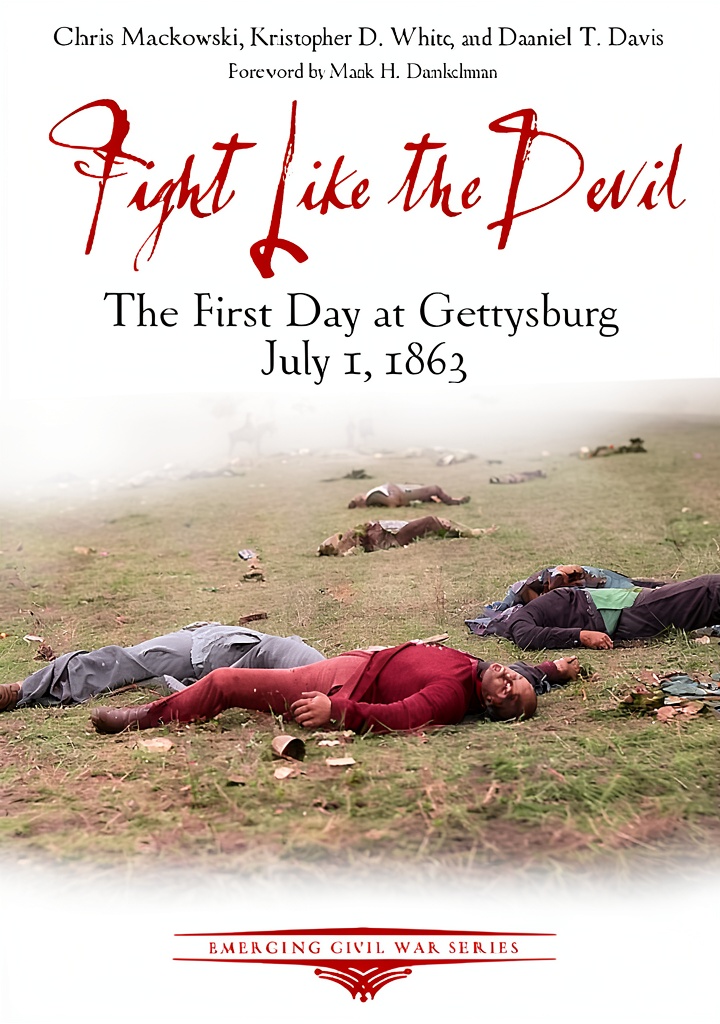
Pros & Cons
What I appreciated:
- Balanced depth—substantive enough for enthusiasts without overwhelming casual readers
- Excellent Kindle feature integration—X-Ray and Enhanced Typesetting add real value
- Consistent quality across the series—you know what you’re getting with each volume
- Strong visual elements—maps and illustrations are well-integrated into the narrative
- Readable prose style—avoids both academic dryness and oversimplification
What gave me pause:
- Map readability on small screens—requires zooming on phone-sized displays
- Not comprehensive enough for academic research—lacks the thorough sourcing of university press books
- Price point—premium for Kindle content, though justified by quality
- Variable author quality—some volumes are stronger than others within the series
- Limited original research—synthesizes existing scholarship rather than breaking new ground
Comparison & Alternatives
Cheaper Alternative: Kindle Unlimited Civil War Selection
If budget is your primary concern, Kindle Unlimited offers numerous Civil War titles at no additional cost beyond the subscription. Having sampled several, the quality varies dramatically. You’ll find decent overviews but rarely the campaign-depth analysis that defines the Emerging Civil War series. The main trade-off is consistency—while you might find a gem, you’ll also wade through poorly researched or poorly formatted books.
Choose this if: You’re cost-conscious and willing to accept variable quality; you want broad exposure to different Civil War topics; you’re a casual reader rather than building specialized knowledge.
Premium Alternative: University Press Academic Editions
For serious scholars or those wanting the definitive work on a specific campaign, university press editions like those from UNC Press or University Press of Kansas represent the gold standard. These typically include extensive primary source references, detailed historiography, and original research. However, they’re often denser, more expensive, and lack the Kindle-enhanced features.
Choose this if: You need comprehensive sourcing for research; you’re willing to trade readability for scholarly rigor; price is secondary to academic credibility.
The Savas Beatie series occupies the sweet spot between these extremes—more substantial than typical popular history but more accessible than academic presses. In my experience, it’s the ideal choice for the serious enthusiast who wants to deepen their understanding without pursuing academic research.
Buying Guide / Who Should Buy
Best for Beginners
If you’re new to Civil War history but want to move beyond basic overviews, this series provides an excellent entry point. The accessible writing style combined with substantive content helps build knowledge progressively. The Kindle features like Word Wise are particularly valuable for newcomers encountering military terminology for the first time. Start with volumes covering battles you’re already somewhat familiar with—the added context will deepen your understanding without overwhelming you.
Best for Professionals
History educators, tour guides, and serious enthusiasts will find these books valuable for maintaining and expanding their knowledge. The consistent format across the series makes them excellent reference works, and the digital format allows quick searching during preparation. While not suitable as primary sources for academic writing, they’re perfect for staying current with mainstream historical interpretation.
Not Recommended For
Academic researchers needing primary source documentation should look to university presses. The Emerging Civil War series synthesizes existing scholarship rather than presenting new research, so it won’t meet scholarly standards for citations.
Casual readers wanting quick, entertaining reads might find the detail level overwhelming. If you’re looking for broad overviews or primarily narrative-driven history, more popular offerings might better suit your needs.
Budget-focused buyers seeking maximum content per dollar may find the price premium difficult to justify, especially when comparable-length Kindle books are available for less.
FAQ
How does this compare to the print edition?
Having used both, the Kindle edition offers superior convenience and searchability, while the print version has better map readability. The content is identical, so the choice depends on your reading preferences and how you plan to use the book.
Are all books in the series equally good?
Quality is generally consistent, but some authors within the series are stronger writers than others. I recommend checking individual volume reviews before purchasing, as the writing style and depth can vary slightly.
Can I use this for academic research?
While the content is accurate and well-researched, the lack of extensive footnotes and primary source references limits its utility for formal academic work. It’s excellent for background knowledge but shouldn’t be cited as a primary source.
How does the X-Ray feature work with historical figures?
X-Ray pulls information from various sources to provide brief biographies and context for individuals mentioned in the text. It’s particularly useful for keeping track of military officers who appear multiple times throughout a campaign.
Is the Word Wise feature customizable?
Yes, you can adjust the frequency of vocabulary hints in your Kindle settings. This makes it adaptable to different knowledge levels—more helpful for beginners, less intrusive for experienced readers.
What’s the best way to read the maps on a Kindle?
On larger devices like tablets, maps are generally readable. On smaller screens, use the zoom function. I found it helpful to bookmark major maps for quick reference during battle descriptions.



 Hearing Problems Book Kindle English Personal Health Teens
  Fordham University Press Literary Criticism Kindle Edition
  Bruntmor Cast Iron Moroccan Tagine Pot
  Electric Pasta Maker Mejuv 110V with 13 Mold Set Green
  Atria Books Kindle Edition Medical Biography Hearing
  Moroccan Clay Tagine Cookware by Treasure Of Morocco
  Medical Handbook for Beginners Otolaryngology Hearing
  Hearing Problems Book English Language Kindle Store
  Neo-Holism The Soul of the State Kindle eBook Philosophy
  Savas Beatie Civil War History Book Kindle Edition Reprint
  Hearing Aid Know Hearing Problems Book Kindle English